Service
Private preview
Replatform the code and the data together
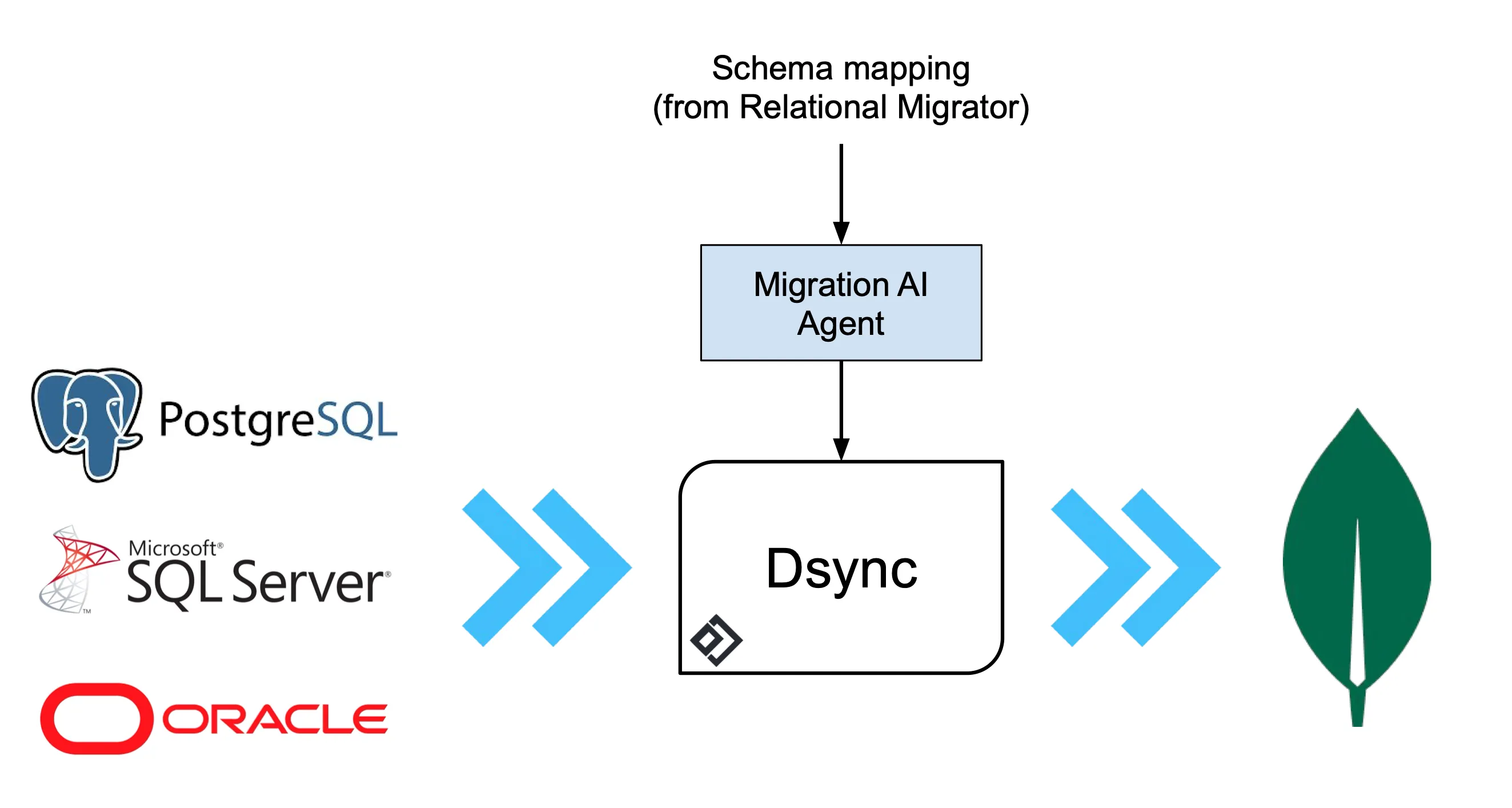
ARPA is our re-platform accelerator. Code migration, schema design and data movement are not three separate projects — it runs them as one, so the codebase and the database switch at the same moment.
Common scenarios
Replatform from legacy to cloud-native databases
The database transitions enterprise teams hit most often.
MS SQL Server to Cosmos DB or MongoDB
Move relational workloads to document or multi-model cloud databases without months of refactoring.
PostgreSQL or Supabase to MongoDB Atlas
Reshape schemas and the data access layer to match how the application actually queries the data.
DynamoDB to MongoDB Atlas or Cosmos DB
Escape vendor lock-in and unlock richer query capabilities with a fully validated migration path.
A relational schema becomes documents that match your queries
Schema design is driven by how the application actually reads the data, not by a mechanical table-to-collection mapping. The data access layer is rebuilt against that shape, and the migration follows it.
Replatforming, without the chaos
Code migration, schema design and data movement are not three separate projects.
Without ARPA
- Bottlenecked on domain expertise and engineering availability
- Risky code changes requiring manual review and merge
- Difficult coordination between the code and data workstreams
- Data migration drifting out of sync with schema changes
With ARPA
- A structured workflow domain experts can operate and audit
- Clear architectural documentation at every phase
- Risk minimization built into the process, not bolted on
- Seamless data migration with minimum downtime, powered by Dsync
Methodology
Six structured phases
Each phase produces reviewable artifacts, so domain experts stay in control without writing every line of code.
- 01
Discovery
- Map the existing application surface, data flows and access patterns
- Identify every consumer of the database, including the forgotten ones
- Produce a reviewable picture of what is actually there
- 02
DAL isolation and tests
- Carve the data access layer out of the application
- Lock current behavior in with tests before anything changes
- Give yourself a regression net for every later phase
- 03
Migration assessment
- Identify gaps, risks and the right cloud target for the workload
- Size the effort against real query patterns rather than table counts
- Decide what moves, what waits and what gets retired
- 04
Schema design
- Empirically validated schemas, designed against real query patterns
- Shaped by how the application reads, not by the old table layout
- Reviewed as an artifact before any code depends on it
- 05
New parallel DAL
- Implement the new data access layer alongside the legacy one
- Run both against the same traffic until the new one is trusted
- Switch consumers over deliberately rather than all at once
- 06
Data migration
- Move the data with Dsync, in step with the code
- Verify both sides agree before the cutover commits
- Minimum downtime, with a back-out that reverses direction
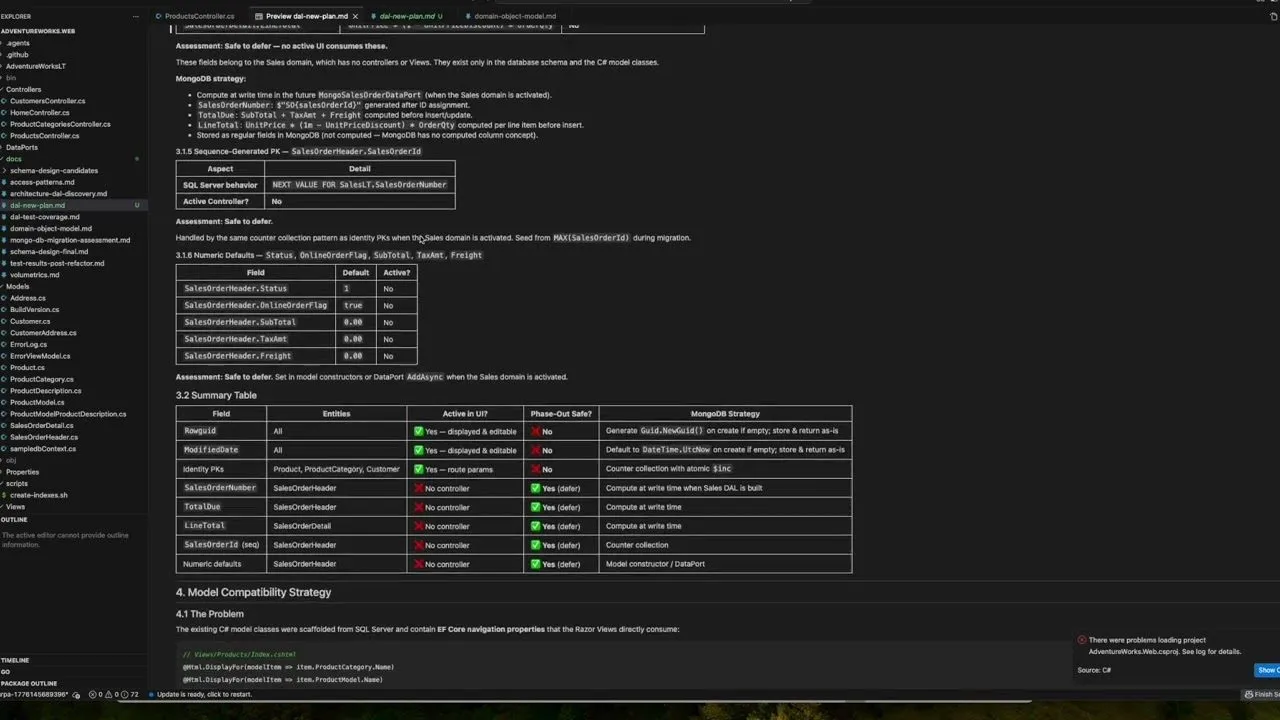
A complete replatform, recorded end-to-end
Walk through how ARPA discovers, refactors, validates and migrates a real workload from MS SQL Server to MongoDB.
 Play the video
Nothing loads from YouTube until you press play.
Want to give it a try?
ARPA is in private preview with selected design partners. Reach out for a free assessment of your replatforming opportunity.